


May 28, 2026
Why Dimensional Inspection Matters Before and After Machining Investment Castings

In the investment casting process, dimensional inspection plays a critical role. Investment casting is a precision manufacturing process, but the journey from a cast component to a fully finished part often involves several additional stages. For many industrial applications, the casting must be machined, inspected, finished, and sometimes assembled before it is ready for use.
Dimensional inspection is an essential component of the overall quality control process.
It is not only about checking whether the finished part meets the drawing. Inspection before and after machining helps manufacturers understand the condition of the starting casting, control machining accuracy, reduce rework, and maintain repeatability across production batches.
For investment castings that require precision machining, dimensional inspection should be treated as part of the manufacturing process, not just a final approval step.
Why Investment Castings Need Dimensional Control
Investment casting or lost-wax casting enables the production of complex shapes, thin sections, internal features, and near-net geometries with high accuracy. However, like all metal manufacturing processes, castings are influenced by material behavior, solidification, shrinkage, heat treatment, and finishing operations.
Even when the casting is produced correctly, slight dimensional variation can occur.
This variation may affect:
- Machining allowance
- Datum stability
- Fixture positioning
- Wall thickness
- Hole locations
- Sealing surfaces
- Assembly fitment
- Final inspection results
For components that remain as-cast, dimensional inspection confirms whether the casting meets the required tolerance. For components that move into machining, inspection has an additional role: it helps determine whether the casting is ready to be machined accurately and efficiently.
This distinction is important.
A casting can be acceptable as a casting, but still requires careful alignment before machining. That is why inspection before machining matters.
Inspection Before Machining: Understanding the Starting Condition
Before machining begins, the manufacturer must understand the actual geometry of the casting.
This is especially important because investment cast components often have complex shapes, uneven profiles, curved surfaces, or features that do not behave like standard billets or bar stock. Unlike a rectangular block of material, a casting may need a more thoughtful approach to locating, clamping, and referencing.
Pre-machining dimensional inspection helps identify:
- Whether the casting has sufficient machining stock
- Whether key surfaces are within expected limits
- Whether the component has shifted during heat treatment
- Whether there is distortion or warpage
- Whether datum surfaces are usable
- Whether critical features are positioned correctly
- Whether the part can be machined without risk of undercut or incomplete cleanup
This early information prevents problems from appearing later in the CNC cycle.
Without pre-machining inspection, the machine shop may only discover issues after cutting has started. By then, time, tooling, and material may already be lost.
The Role of Machining Allowance
Machining allowance is one of the most important reasons to inspect castings before machining.
Investment castings are often designed with extra material on critical surfaces that will be finished later. This allowance provides the machine shop with sufficient stock to meet the final dimension, surface finish, flatness, bore accuracy, or sealing requirement.
If the allowance is too low, the final machined surface may not fully clean up. If allowance is excessive or uneven, machining time increases and tool load becomes less predictable. This is also why precision machining after investment casting must be planned around machining allowance, datum stability, and workpiece alignment.
Inspection before machining helps verify whether the available stock is suitable for the planned machining process.
For example:
- A flange face may need enough stock for flatness and sealing.
- A bore may require sufficient material for final diameter control.
- A mounting surface may need cleanup across the full contact area.
- A datum face may need to be stable enough for repeatable clamping.
By checking these conditions before machining, manufacturers can avoid unnecessary rework and improve first-pass success.
Datum Selection and Workpiece Alignment
Dimensional inspection also supports one of the most important parts of CNC machining: datum selection.
A datum is the reference point, surface, or feature used to locate the part during machining and inspection. In cast components, datum selection can be more complex than in standard machined-from-solid parts because cast surfaces may include draft, curvature, or natural process variation.
If the wrong datum is selected, the final machined features may be dimensionally correct in isolation but misaligned with the rest of the component.
This can affect:
- Assembly fitment
- Hole position
- Port alignment
- Sealing faces
- Bearing seats
- Threaded connections
- Final geometry
Workpiece alignment ensures that the casting is correctly positioned inside the CNC machine before cutting begins. This is where modern probing systems add significant value.
Automated Probing Before Machining
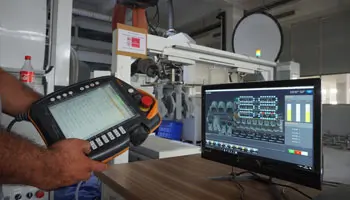
In advanced CNC machining, modern automated probing systems can verify the geometry and position of the starting workpiece before machining begins.
Instead of relying only on manual setup, the machine uses a probe to measure selected features or surfaces. Based on this data, the machine can adjust work offsets and align the machining program to the actual workpiece condition.
This helps improve accuracy, setup consistency, and process control.
Leading manufacturers of machine tool probing systems describe machine tool probes as systems used for workpiece setup and inspection, helping improve CNC machining accuracy and efficiency. Probing technology supports automated component setup, in-cycle gauging, tool measurement, broken tool detection, and inspection-related process control.
For investment castings, this is especially valuable because each casting may have small but acceptable dimensional differences. Automated probing helps the CNC machine understand the real workpiece before cutting begins.
This can support:
- More accurate workpiece alignment
- Reduced manual setup dependency
- Better first-part accuracy
- Improved offset control
- Lower risk of machining error
- Faster setup for repeatable production
- Better use of available machining allowance
In practical terms, probing helps connect the casting’s actual geometry with the machining strategy.
“First-Time-Right” Alignment in Cast-to-Machined Components
For cast-to-machined components, the goal is not simply to machine accurately. The goal is to machine accurately on the first attempt.
A “First-Time-Right” approach depends on knowing how the starting casting is positioned before machining begins. Automated probing and workpiece alignment help by checking the component inside the machine and adjusting offsets before critical cutting operations begin.
This is particularly important for components with:
- Multiple machined faces
- Complex profiles
- Tight positional tolerances
- Critical bores
- Flange surfaces
- Assembly interfaces
- Functional ports
- Uneven as-cast surfaces
When the machine aligns itself to the actual workpiece, the risk of machining the part from an incorrect reference point is reduced.
This does not replace good casting control. It strengthens the machining process by giving the CNC system better information before machining begins.
In-Process Inspection During Machining
Inspection does not have to occur only before and after machining. In many advanced machining workflows, inspection can also happen during the machining process.
In-process inspection allows manufacturers to check certain features before the part is removed from the machine. This can be useful when critical features require validation before the next machining operation continues.
For example, the machine may verify:
- Bore diameter
- Surface position
- Feature location
- Tool wear impact
- Workpiece shift
- Critical dimensions between operations
Machine tool probing solutions also support in-cycle gauging and automated process control functions, allowing measurement to become part of the machining workflow rather than a separate offline activity.
This approach helps reduce the chance that a part completes the full machining cycle before an issue is detected.
For production environments, this can improve consistency and reduce avoidable scrap.
Inspection After Machining: Validating the Finished Component
Once machining is complete, dimensional inspection confirms whether the finished component meets drawing requirements.
This inspection may include:
- Critical dimensions
- Hole locations
- Bore diameters
- Flatness
- Parallelism
- Concentricity
- Perpendicularity
- Thread accuracy
- Surface finish
- Sealing faces
- Assembly interfaces
Post-machining inspection is especially important because many investment cast components are used in assemblies or functional systems. A small deviation in a machined feature can affect fitment, sealing, alignment, movement, or performance.
For example:
- A valve body may require accurate port and flange geometry.
- A pump component may require precise bores and sealing surfaces.
- A bracket may require the correct hole position and flatness.
- A manifold may require accurate connection points.
- A mechanical housing may require stable bearings or mounting interfaces.
Final inspection provides confidence that the casting and machining stages have worked together successfully.
Connecting Inspection Data Back to Process Control
The value of dimensional inspection increases when the data is used to improve the process.
Inspection should not only sort acceptable parts from rejected parts. It should help identify patterns.
For example:
- Are certain dimensions consistently drifting?
- Is one feature regularly close to the tolerance limit?
- Is machining stock uneven in a repeated pattern?
- Is heat treatment causing predictable movement?
- Is a fixture creating alignment variation?
- Is a casting feature affecting datum stability?
When inspection data is reviewed properly, it becomes a feedback tool.
The foundry can adjust casting process controls. The machining team can refine fixtures or offsets. Engineering teams can review machining allowances or datum strategy. Quality teams can update inspection checkpoints.
This feedback loop supports long-term repeatability in investment casting programs.
Why Inspection Matters for Assembly Readiness
Many investment castings do not end as individual parts. They become part of larger assemblies.
In these cases, dimensional inspection must consider how the component will function downstream. A machined part may meet most individual dimensions but still pose assembly challenges if a critical interface is not properly controlled.
Assembly-related inspection may focus on:
- Mating faces
- Hole alignment
- Thread position
- Sealing surfaces
- Bearing seats
- Locating features
- Flatness and perpendicularity
- Fitment with bought-out parts
- Clearance between components
This is why inspection planning should consider the final application, not only individual component drawings.
A part that is dimensionally correct but difficult to assemble still creates production risk. Inspection helps prevent this by validating the features that matter most to the final use.
Reducing Rework and Scrap Through Early Detection
One of the practical benefits of dimensional inspection before and after machining is reduced rework.
Detecting potential issues before machining allows the team to decide whether the part is suitable, whether setup changes are necessary, or whether it should be held for review.
During machining, checking features makes it possible to correct problems before completing the part.
Reviewing final inspection data across batches enables teams to identify patterns and drive long‑term improvement.
This reduces:
- Scrap
- Re-machining
- Tooling waste
- Inspection delays
- Customer complaints
- Assembly problems
- Schedule disruption
In complex manufacturing programs, avoiding a problem early is almost always better than correcting it late.
Shilpan Steelcast’s Approach to Dimensional Inspection and Machining Alignment

Shilpan Steelcast supports investment cast components through an integrated manufacturing model that includes casting, precision machining, inspection, assembly, and supply chain management.
For machined investment castings, dimensional control is important at multiple stages. Shilpan’s machining facilities use automated probing and workpiece alignment to verify the geometry of the starting workpiece before machining begins. The machine can adjust offsets in real time, helping ensure First-Time-Right alignment for every part.
This capability supports more predictable CNC machining, especially for cast components where starting geometry must be understood before critical machining operations begin.
By connecting investment casting, machining, inspection, and process feedback, Shilpan helps customers move from cast forms to finished, production-ready components with greater consistency.
As an investment casting foundry in Rajkot, India, Shilpan’s integrated capabilities support customers who require not only castings, but castings that are machined, inspected, assembled, documented, and delivered with reliability.
Conclusion
Dimensional inspection before and after machining is essential for investment cast components that require precision-machined features.
Before machining, inspection helps verify casting condition, machining allowance, datum stability, and workpiece alignment. During machining, probing and in-process checks can support better process control. After machining, dimensional inspection confirms that the final component meets functional and drawing requirements.
For manufacturers, inspection is not only a quality gate. It is a control tool.
It connects casting performance with machining accuracy. It supports repeatability. It reduces rework. It improves assembly readiness. Most importantly, it helps ensure that the finished component performs as intended.
In cast-to-machined manufacturing, accuracy does not begin at final inspection. It begins with understanding the workpiece before the first cut is made.
Improve Cast-to-Machined Accuracy from the First Setup
If your components require investment casting followed by precision machining, Shilpan Steelcast can support dimensional inspection, automated probing, workpiece alignment, and process control from casting through finished component delivery.
Explore Shilpan Steelcast’s integrated capabilities in investment casting, precision machining, inspection, assembly, and ready-to-use component manufacturing. Contact us today!
Latest Post
-
 September 3, 2026 Non-Destructive Testing for Investment Cast Components: A Practical Guide
 -
August 28, 2026 Gating and Feeding in Investment Casting: Why Metal Flow Determines Casting Quality
-
July 31, 2026 Strategic Sourcing in Ready-to-Use Component Programs: Why Control Matters Beyond the Casting