



July 31, 2026
Strategic Sourcing in Ready-to-Use Component Programs: Why Control Matters Beyond the Casting

In many manufacturing programs, the casting is only one part of the final requirement.
A customer may begin with an investment cast component, but the final supply expectation often extends further. The part may need precision machining, surface treatment, heat treatment, bought-out hardware, inserts, fasteners, seals, secondary components, assembly, inspection, documentation, packaging, and delivery planning.
This is where strategic sourcing becomes important.
In ready-to-use component programs, sourcing is not simply about purchasing additional parts from outside vendors. It is about controlling every externally sourced item, process, and dependency that contributes to the final component or assembly.
A casting may be manufactured correctly, but if the sourced parts are inconsistent, late, undocumented, or poorly integrated, the complete program can still face delays and quality issues.
For this reason, strategic sourcing must be treated as part of the manufacturing system, not as a separate purchasing activity.
Ready-to-Use Components Require More Than Casting Capability
Investment casting creates the foundation of many complex metal components. It provides near-net-shape geometry, design flexibility, and a strong starting point for precision manufacturing.
But many customer programs do not end with raw castings.
A finished component may require:
- CNC-machined features
- sealing surfaces
- threaded holes
- bought-out fasteners
- bushes, bearings, or inserts
- surface treatments and finishes
- heat treatment
- standard hardware
- sub-assembly work
- testing or inspection
- customer-specific packing
- export documentation
- scheduled delivery support
Each of these items adds a layer of responsibility.
When handled properly, the customer receives a component that is closer to production use. When handled poorly, the customer receives complexity in another form.
This is why a ready-to-use component program requires coordination across manufacturing, sourcing, inspection, assembly, and supply chain planning.
What Strategic Sourcing Means in Component Manufacturing
Strategic sourcing is different from simple procurement.
Procurement often focuses on buying what is needed. Strategic sourcing focuses on selecting, qualifying, controlling, and coordinating external inputs so they support the complete manufacturing program.
In component manufacturing, this may include:
- identifying reliable vendors
- qualifying bought-out parts
- evaluating alternate manufacturing routes
- ensuring material and dimensional compliance
- controlling substitutions
- monitoring delivery schedules
- verifying documentation
- coordinating surface treatment vendors
- managing secondary process suppliers
- maintaining traceability
- aligning sourced parts with assembly requirements
The goal is not just to obtain parts or services. The goal is to ensure they meet the program’s technical, quality, timing, and documentation needs.
For ready-to-use components, this distinction matters because the final responsibility does not stop at the casting.
Why Sourced Items Can Affect Final Component Quality
A finished component is only as reliable as the inputs that go into it.
Even if the investment casting and machining are controlled properly, externally sourced items can influence the final result.
A fastener with incorrect material grade can affect assembly strength. A bush with poor dimensional control can create fitment problems. A seal sourced from an inconsistent supplier can affect leakage performance. A coating or finishing process performed without control can create surface defects or corrosion risk. A missing certificate can delay shipment approval or customer release.
These issues may not originate inside the foundry, but they affect the final component delivered to the customer.
This is why sourced items must be managed under a clear quality framework.
In ready-to-use component programs, sourcing cannot be treated as a back-end convenience. It directly influences product reliability, assembly readiness, and customer confidence.
The Risk of Uncontrolled Vendor Dependencies
Many manufacturing programs become difficult not because any single process is weak, but because too many dependencies are unmanaged.
A casting may be ready, but a bought-out part is delayed. Machining may be complete, but a surface treatment vendor is waiting for batch scheduling. Assembly may be planned, but one small sourced item is unavailable. Documentation may be incomplete because a secondary supplier did not provide the required certificate.
These are not minor issues when production schedules are involved.
Uncontrolled sourcing can create:
- delivery delays
- quality variation
- documentation gaps
- unclear accountability
- repeated follow-ups
- assembly interruptions
- batch traceability issues
- customer approval delays
- higher coordination burden
For customers, this means the burden of managing multiple suppliers may still remain, even if the core casting has been outsourced.
Strategic sourcing reduces this risk by bringing external dependencies under one planned and monitored system.
Why Control Matters Beyond the Casting

The casting may be the most technically visible part of the program, but the final supply requirement often depends on everything that happens around it.
A ready-to-use component may require multiple steps after casting:
- precision machining
- inspection
- finishing
- sourced hardware
- assembled inserts
- special packing
- documentation
- release planning
- export coordination
If these steps are not controlled together, problems can appear late in the program.
A part may be dimensionally correct but delayed due to a missing outsourced process. An assembly may be complete but held because a bought-out component lacks traceability. A shipment may be ready but delayed because documentation from a secondary supplier is incomplete.
This is why strategic sourcing must be connected to quality, production planning, and delivery control.
The value lies not only in sourcing externally. The value lies in controlling what is sourced.
Strategic Sourcing and Assembly Readiness
Assembly is where sourcing issues often become visible.
A sourced part that looks acceptable on paper may create problems during assembly if dimensions, finish, material, or fitment are not controlled properly.
Assembly readiness depends on:
- correct part specifications
- reliable vendor selection
- incoming inspection
- batch consistency
- dimensional compatibility
- availability at the right time
- clear assembly instructions
- traceability where required
- correct packing and handling
For example, a machined casting may be ready for assembly, but if a purchased insert does not fit consistently, production slows down. If fasteners vary between batches, torque or fitment may be affected. If a surface-treated component arrives late, the assembly schedule is disrupted.
Strategic sourcing helps prevent these issues by aligning sourced items with assembly requirements from the beginning.
This is particularly important when the customer expects a finished or semi-finished component rather than individual parts. Therefore, the transition from component manufacturing to ready-to-use assemblies relies on controlled inputs at every stage.
Sourcing Secondary Manufacturing Processes
Strategic sourcing is not limited to bought-out parts. It can also involve secondary manufacturing processes.
Depending on the component, a program may require:
- forging
- shell moulding
- die casting
- metal stamping
- coatings
- plating
- special finishing
- heat treatment
- surface treatment
- outsourced testing
- special packaging
Not every process must be performed in-house to be controlled well. What matters is whether the manufacturing partner has a structured system for selecting vendors, defining specifications, inspecting output, managing schedules, and maintaining accountability.
In ready-to-use component programs, these external processes must be integrated into the overall manufacturing plan.
The customer should not have to chase multiple vendors for one final component.
Documentation and Traceability in Strategic Sourcing
Documentation becomes more important when sourced items and secondary processes are involved.
Customers may require:
- material test certificates
- heat treatment records
- surface treatment certificates
- inspection reports
- vendor compliance documents
- certificates of conformity
- batch traceability
- packing lists
- export documents
- customer-specific declarations
If these documents are not collected and verified properly, the physical component may be ready but commercially or technically incomplete.
For global supply programs, gaps in documentation can delay dispatch, customs clearance, internal approvals, or customer release. Maintaining documentation discipline becomes crucial when components are part of a larger global supply support program.
Strategic sourcing must therefore include documentation control.
A reliable manufacturing partner should know what documentation is required, who must provide it, when it must be collected, and how it connects to the final delivery.
Incoming Inspection and Supplier Quality Control
When sourced items enter the manufacturing flow, they should not be accepted blindly.
Incoming inspection helps ensure that bought-out parts and outsourced process outputs meet the required specifications before they move into machining, assembly, packing, or dispatch.
Inspection may include:
- dimensional checks
- material verification
- visual inspection
- surface finish checks
- certificate review
- fitment checks
- batch identification
- quantity verification
- packaging condition checks
The level of inspection depends on the criticality of the item.
A standard fastener may require basic verification. A precision insert, seal, machined sub-component, or surface-treated part may require stricter checks. A safety-critical or performance-critical item may require documented inspection and traceability.
This control helps prevent supplier variation from becoming a customer problem.
Strategic Sourcing and Lead Time Reliability
Lead time in ready-to-use component programs is affected by more than casting and machining capacity.
Externally sourced items and processes can become hidden bottlenecks.
A delay in one bought-out item can delay the entire assembly. A secondary process vendor can extend the schedule if capacity is not planned. A missing document can hold dispatch even when production is complete.
Strategic sourcing improves lead time reliability by planning external dependencies early.
This includes:
- identifying long-lead items
- qualifying alternate suppliers where needed
- aligning delivery schedules
- monitoring supplier commitments
- maintaining stock for repeat programs
- coordinating batches with production plans
- tracking documentation before dispatch
For customers, this improves confidence because the manufacturing partner is not reacting to sourcing issues at the last moment.
The best sourcing systems reduce surprises.
Cost Control Beyond Unit Price
Sourcing decisions are often evaluated on unit price. But in ready-to-use component programs, the lowest-price sourced item may not create the lowest total cost.
Poor sourcing decisions can increase cost through:
- rework
- inspection time
- assembly delays
- rejection
- urgent freight
- repeated follow-ups
- supplier replacement
- documentation gaps
- customer complaints
- production downtime
A slightly higher-quality sourced part from a reliable vendor may reduce total program risk. A better-controlled secondary process may prevent delays later. A vendor that provides consistent documentation may save time during dispatch and customer approval.
Strategic sourcing evaluates cost through the full program lens, not just purchase price.
This is especially important when the final deliverable is a ready-to-use component.
Why Single-Source Accountability Matters
When customers manage multiple suppliers directly, responsibility is distributed.
One vendor produces the casting. Another performs machining. Another supplies bought-out parts. Another completes finishing. Another supports assembly. Another handles packing or logistics.
If something goes wrong, identifying the root cause can become slow and difficult.
Single-source accountability reduces this friction.
When one manufacturing partner manages casting, machining, sourcing, assembly, inspection, documentation, and supply coordination, the customer has one point of responsibility.
This does not mean every process must be performed under one roof. It means the complete program must be controlled under one system.
For customers, this reduces coordination effort and improves clarity.
The question becomes simpler: who owns the final result?
Strategic Sourcing as Part of Integrated Manufacturing
Strategic sourcing works best when it is connected to integrated manufacturing.
If sourcing is isolated from engineering, machining, assembly, inspection, and supply chain planning, it becomes reactive. Parts are purchased when needed, problems are addressed when they arise, and schedules are adjusted after delays occur.
When sourcing is integrated, it supports the manufacturing plan from the beginning.
Engineering can define critical requirements. Machining can identify interface needs. Assembly can define fitment expectations. Quality can define inspection criteria. Supply chain teams can define inventory and delivery needs.
This creates a more controlled path from casting to finished component.
For ready-to-use component programs, this integration is essential.
Shilpan Steelcast’s Approach to Strategic Sourcing
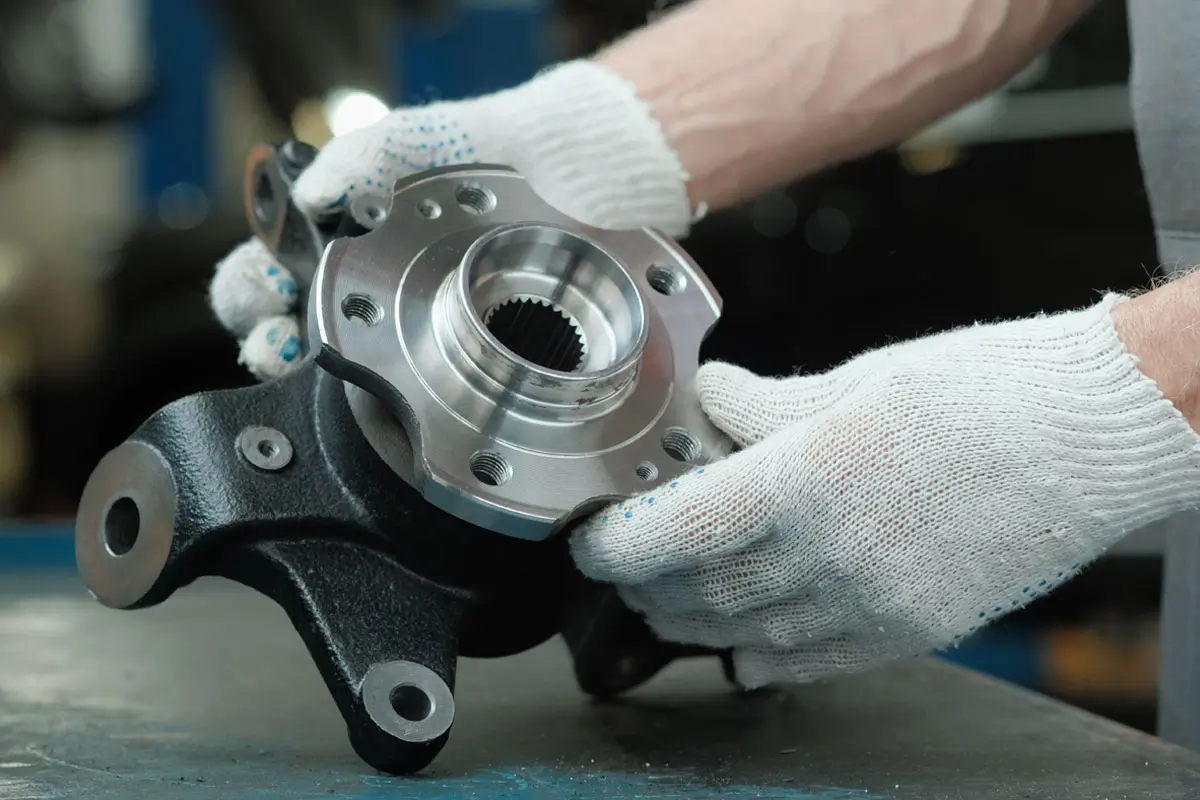
Shilpan Steelcast’s current manufacturing model is built around delivering more than standalone investment castings.
As one of India’s largest investment casting manufacturers, Shilpan supports customers with investment casting, precision machining, assembly, strategic sourcing, and supply chain management under one coordinated quality system and schedule.
This approach is useful when customer programs require additional bought-out parts, secondary manufacturing processes, finishing, documentation, assembly support, or delivery planning beyond the casting itself.
By managing strategic sourcing as part of the broader manufacturing workflow, Shilpan helps reduce the customer’s coordination burden and improve program control.
The focus is not simply on supplying individual parts. It is on helping customers receive complete, production-ready components with clearer accountability.
Conclusion
Strategic sourcing plays a critical role in ready-to-use component programs.
When the final requirement extends beyond casting, every sourced item, secondary process, certificate, finish, insert, fastener, and delivery dependency can influence the final outcome.
The value of strategic sourcing is not only in finding vendors. It is in controlling external inputs so they support the same quality, timing, documentation, and assembly requirements as the core manufacturing process.
For complex component programs, this control matters.
A casting may begin the manufacturing journey, but ready-to-use delivery depends on everything that follows. Strategic sourcing ensures those additional requirements do not become unmanaged risks.
In modern manufacturing, the strongest partners are not only those who can make the core component. They are the ones who can control the complete path from casting to finished supply.
Bring Sourcing, Assembly, and Supply Control Under One System
If your component program requires investment casting along with sourced parts, secondary processes, assembly, documentation, or supply chain coordination, Shilpan Steelcast can support the complete path from cast component to ready-to-use delivery.
Explore Shilpan Steelcast’s integrated capabilities in investment casting, precision machining, assembly, strategic sourcing, and supply chain management.
Latest Post
-
 July 30, 2026 Part Consolidation Through Investment Casting: Reducing Complexity Before Machining and Assembly
 -
June 26, 2026 Tooling Strategy in Investment Casting: Why Wax Pattern Dies Shape Long-Term Part Quality
-
June 26, 2026 Investment Casting vs Sand Casting vs Shell Moulding: Choosing the Right Casting Process


