



June 26, 2026
Tooling Strategy in Investment Casting: Why Wax Pattern Dies Shape Long-Term Part Quality

In investment casting, the final component begins long before molten metal enters the ceramic shell. It begins with tooling.
Wax pattern dies are one of the most important foundations of a successful investment casting program. They define the starting geometry of the wax pattern, influence dimensional consistency, affect the machining allowance, support repeatability, and shape the component’s long-term stability across production batches.
A well-designed wax pattern die does more than produce a wax replica. It supports the entire manufacturing route from casting to machining, inspection, finishing, and assembly.
For components that must be produced repeatedly with stable dimensions and predictable downstream performance, the tooling strategy cannot be treated as an early-stage formality. It is a long-term quality decision.
Why Tooling Matters in Investment Casting
Investment casting is often selected for components that require complex geometry, fine detail, thin walls, near-net-shape production, and strong surface finish. These advantages depend heavily on how accurately and consistently the wax pattern is produced.
The wax pattern is the first physical version of the component. Every ceramic shell is built around it. Every casting cavity is derived from it. Every finished component carries the influence of that initial pattern.
If the wax pattern is inconsistent, the casting will be inconsistent.
This is why tooling quality affects:
- Dimensional accuracy
- Wall thickness control
- Feature repeatability
- Surface consistency
- Machining allowance
- Assembly fitment
- Inspection stability
- Production repeatability
- Long-term part quality
A casting process may be well controlled, but if the tooling is weak, the process starts with variation already built into it.
What Is a Wax Pattern Die?
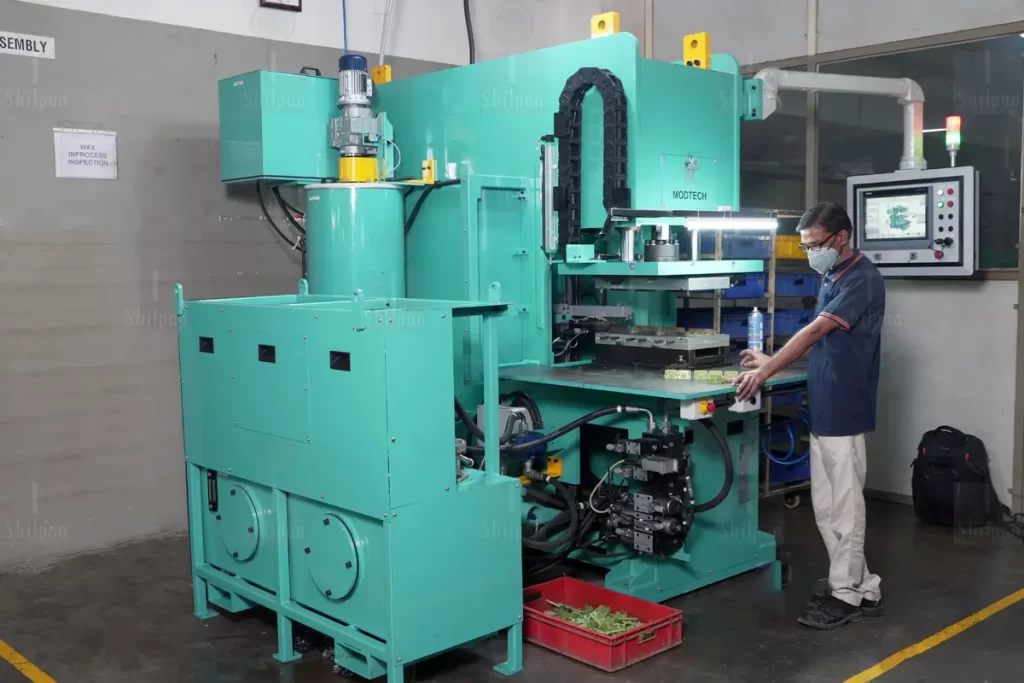
A wax pattern die is a tool used to produce wax patterns for investment casting, also known as lost-wax casting or Feinguss in German. Wax is injected into the die cavity, allowed to solidify, and then removed as a pattern that replicates the geometry of the final cast component.
This wax pattern is then assembled onto a gating system, coated with ceramic slurry, and used to create the shell mould for metal pouring.
In simple terms, the die creates the wax pattern, the wax pattern creates the ceramic cavity, and the ceramic cavity creates the casting.
Because of this chain, tooling accuracy directly influences casting accuracy.
Wax pattern dies may vary in complexity depending on the component. A simple part may require a straightforward die. A complex component with internal features, thin sections, cores, multiple pull directions, or tight dimensional requirements may require a far more sophisticated tooling strategy.
The more demanding the casting, the more important the tooling becomes.
Tooling Is Not Only About Shape
A common mistake is to think of tooling only as a means of creating the external form of a part.
In investment casting, tooling also supports process control.
A good wax pattern die must consider:
- Part geometry
- Shrinkage allowance
- Wax flow
- Cooling behavior
- Pattern removal
- Dimensional stability
- Gating strategy
- Assembly of wax patterns
- Inspection requirements
- Machining stock
- Production volume
- Tool life
The die must create a wax pattern that can be produced consistently, handled safely, assembled correctly, shelled reliably, and ultimately converted into a stable casting.
If the tool is designed solely around CAD geometry rather than manufacturing behavior, problems may arise later in production.
Shrinkage Allowance and Dimensional Planning
One of the most important functions of tooling strategy is shrinkage control.
In investment casting, both the wax and the metal undergo dimensional changes during processing. Wax patterns may shrink after injection. Metal shrinks during solidification and cooling. Heat treatment and finishing operations may also influence final dimensions.
The die must account for these changes.
This is why tooling dimensions are not simply copied from the final component drawing. They are adjusted based on material behavior, component geometry, process knowledge, and expected shrinkage.
Shrinkage allowance depends on several factors:
- Alloy type
- Component size
- Wall thickness
- Geometry complexity
- Solidification behavior
- Heat treatment requirements
- Section transitions
- Final tolerance expectations
If shrinkage is not properly accounted for, the final casting may deviate from the required dimensions. This can create machining challenges, inspection failures, or assembly issues.
A good tooling strategy converts manufacturing experience into dimensional stability.
Machining Allowance Begins at the Tooling Stage
Many investment cast components require precision machining after casting.
Critical areas such as bores, sealing faces, threads, mounting surfaces, flange faces, and datum surfaces are often machined to final specification. To support this, the casting must include enough material in the right locations.
This is known as machining allowance.
Machining allowance is not something that can be corrected easily after the tooling is made. It must be planned during the tooling stage.
Too little allowance can cause incomplete cleanup during machining. Too much allowance can increase machining time, tool wear, cost, and cycle variation. Uneven allowance can make workpiece alignment more difficult and reduce machining repeatability.
A strong tooling strategy identifies:
- Which surfaces will remain as-cast
- Which surfaces will be machined
- Which features are function-critical
- Which datums will be used for machining
- How the part will be held during CNC operations
- How much stock is required in each critical area
This is where investment casting and precision machining must be considered together. This is also why precision machining after investment casting must be considered during tooling and allowance planning.
The tooling die should not only help produce a casting. It should help produce a casting that can be machined efficiently into a finished component.
Tooling Design and Wax Pattern Consistency
Wax injection must be controlled for repeatability.
The die cavity, injection points, venting, cooling, and ejection method all influence the consistency of wax pattern production.
If wax does not fill the cavity properly, fine details may be incomplete. If cooling is uneven, the pattern may distort. If ejection is difficult, the pattern may deform during removal. If thin sections are poorly supported, pattern damage may occur before shell building.
These issues can affect the final casting even if they appear small at the wax stage.
Wax pattern consistency depends on:
- Die design
- Wax temperature
- Injection pressure
- Cooling time
- Die temperature
- Venting
- Ejection method
- Operator handling
- Pattern inspection
A well-designed tool makes it easier for the foundry to produce consistent wax patterns across batches. This consistency is closely connected to long-term repeatability in investment casting programs.
This repeatability becomes especially important in long-term production programs where the same component must be supplied repeatedly over months or years.
Pattern Removal and Tooling Practicality
A die must not only form the wax pattern. It must allow the pattern to be removed without damage.
This becomes important for components with undercuts, thin walls, deep cavities, ribs, bosses, complex surfaces, or delicate features.
If the wax pattern is difficult to remove, it may bend, crack, distort, or lose fine detail. That damage can then carry forward into shell building and casting.
Tooling may need features such as:
- Split die construction
- Inserts
- Slides
- Cores
- Pulls
- Ejector systems
- Controlled parting lines
The correct tooling approach depends on the component design.
A practical tool is one that supports repeatable production, not just one that can theoretically form the geometry once.
This is why early design review is important. Sometimes small changes to component design can make the tooling more stable without affecting function. These changes may improve pattern release, reduce tooling complexity, and increase long-term repeatability.
Tooling Strategy for Complex Geometries
Investment casting is often selected because it can produce geometries that are difficult for other processes. However, complex geometry still requires careful tooling planning.
Components may include:
- Thin walls
- Curved surfaces
- Internal passages
- Multiple bosses
- Flanges
- Ribs
- Mounting features
- Flow paths
- Asymmetric sections
- Tight functional interfaces
Each of these features influences tooling.
For example, thin walls may need careful wax flow control. Heavy sections may require attention to shrinkage and cooling. Complex internal features may need cores or multi-part tooling. Functional interfaces may need additional stock for later machining.
The tooling strategy must connect component design with manufacturing reality.
When this connection is handled correctly, investment casting can deliver complex components with strong repeatability. When it is ignored, the same complexity can create variation and rework.
Prototype Tooling vs Production Tooling
Not every investment casting program begins with full production tooling.
In early development, prototype tooling may be used to validate geometry, fitment, material behavior, or functional performance. This can help reduce upfront tooling investment while the design is still evolving.
However, prototype tooling and production tooling serve different purposes.
Prototype tooling may prioritize speed and design validation. Production tooling must prioritize repeatability, durability, dimensional stability, and long-term consistency.
Before moving from prototype to production, manufacturers must evaluate whether the tooling strategy is suitable for recurring output.
Important questions include:
- Has the design been frozen?
- Are critical dimensions validated?
- Is machining allowance stable?
- Has shrinkage behavior been confirmed?
- Is the tooling durable enough for production volume?
- Can wax patterns be produced consistently?
- Are inspection results stable across trial batches?
- Does the tool support future repeat orders?
A component that works in prototype form may still need tooling refinement before full production begins.
This is an important stage in reducing long-term manufacturing risk.
Tool Maintenance and Long-Term Quality
Tooling quality does not end after the die is built.
Over time, tooling can wear, shift, become damaged, or lose accuracy. Inserts may loosen. Edges may wear. Ejection systems may degrade. Repeated wax injection cycles can affect tool condition.
If tooling maintenance is ignored, part quality may gradually change.
This can lead to:
- Dimensional drift
- Surface defects
- Wax pattern distortion
- Parting line variation
- Increased rejection
- Machining inconsistency
- Inspection instability
Regular tool inspection and maintenance help maintain consistent wax pattern quality.
For long-term investment casting programs, tooling records and maintenance discipline become part of quality control. The tool must be treated as a controlled production asset, not just a one-time project expense.
Inspection Feedback Should Inform Tooling Decisions
Dimensional inspection is closely connected to the tooling strategy.
Inspection data from wax patterns, raw castings, and machined components can reveal whether tooling is performing as expected.
For example:
- Wax patterns may show dimensional variation.
- Raw castings may show repeated drift in one feature.
- Machining data may show uneven stock in a critical area.
- Final inspection may reveal positional variation.
- Assembly feedback may show fitment issues.
These patterns may point back to tooling design, tooling wear, shrinkage assumptions, or process conditions.
A strong manufacturing system does not treat inspection only as a pass/fail activity. It uses inspection data to improve the process.
If tooling needs adjustment, modification, repair, or redesign, inspection feedback helps define the action more accurately.
This is especially important when cast components move into precision machining and assembly. The tool must support the entire downstream manufacturing path.
Tooling Strategy and Production Cost
Tooling decisions influence cost in several ways.
A lower-cost tool may reduce upfront expense but create higher downstream cost if it leads to poor repeatability, excessive machining, pattern damage, or inspection problems.
A better-engineered tool may require more planning and investment at the beginning, but it can reduce long-term production cost by improving consistency.
Tooling affects:
- Wax pattern rejection
- Casting yield
- Machining time
- Fixture stability
- Inspection effort
- Rework
- Scrap
- Delivery reliability
- Long-term repeatability
This is why tooling cost should not be evaluated in isolation.
For recurring production, the better question is not: “How inexpensive is the tool?”
The better question is: “Will this tool support stable production over the life of the program?”
The answer often determines whether the program remains efficient after the first batch.
Tooling as Part of Integrated Manufacturing
In modern manufacturing programs, the casting is rarely the final step.
Many investment cast components must move into precision machining, surface treatment, inspection, assembly, packaging, and supply chain delivery. Early tooling decisions can influence every one of these later stages.
For example:
- Poor tooling can cause variation in machining stock.
- Weak datum planning can affect CNC alignment.
- Inconsistent wax patterns can affect inspection stability.
- Uncontrolled geometry can create assembly challenges.
- Repeatability issues can affect delivery schedules.
This is why the tooling strategy should be integrated into the entire manufacturing process.
A die should be designed not only to produce castings, but also to produce castings that can become finished, ready-to-use components with predictable quality.
This aligns closely with integrated manufacturing, where design, tooling, casting, machining, inspection, and assembly are planned as connected stages.
Shilpan Steelcast’s Approach to Tooling and Long-Term Part Quality
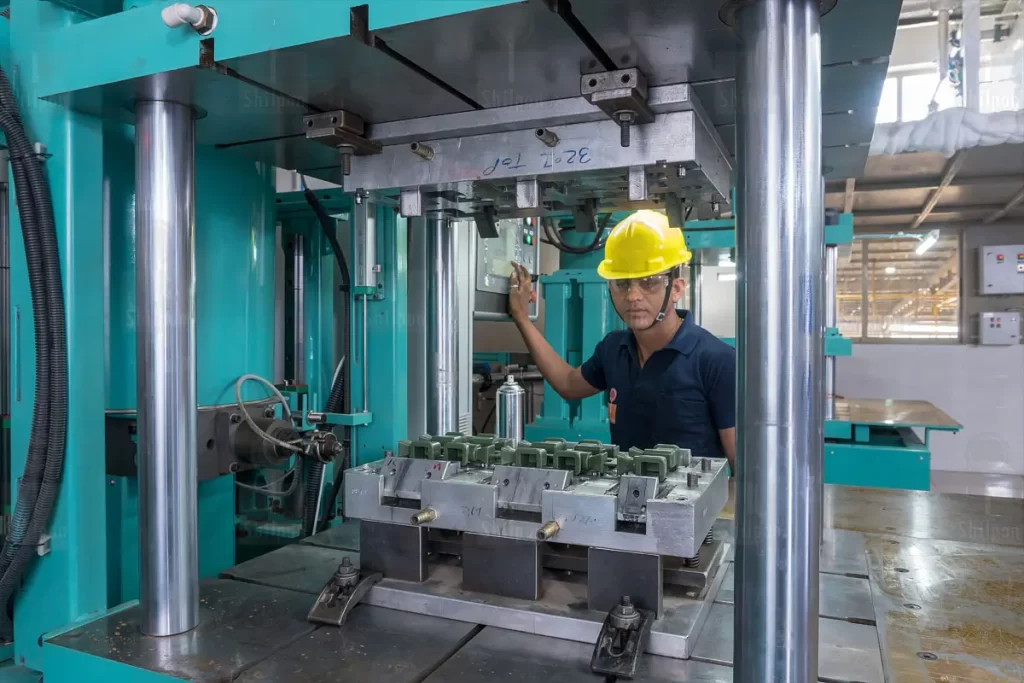
Shilpan Steelcast’s investment casting programs are built around controlled execution from early engineering review through casting, precision machining, inspection, assembly, and supply chain support.
Tooling plays an important role in this model because wax pattern dies influence the consistency of every subsequent casting.
As one of India’s largest manufacturers of investment castings, Shilpan Steelcast focuses on components that require careful consideration of geometry, machining allowances, repeatability, and readiness for downstream processes from the very beginning. Our goal is not only to produce high-quality castings but also to establish a stable manufacturing process that supports consistent production.
By aligning tooling strategy with investment casting, precision machining, inspection, and assembly requirements, Shilpan helps customers move from design intent to production-ready components with greater confidence and control.
This is especially important for programs where long-term quality depends on consistent wax patterns, controlled casting geometry, and reliable downstream machining.
Conclusion
Wax pattern dies shape far more than the first stage of investment casting. They influence dimensional accuracy, repeatability, machining allowance, surface consistency, inspection stability, and long-term part quality.
A well-designed tool supports stable wax pattern production. Stable wax patterns support consistent castings. Consistent castings support predictable machining, inspection, finishing, and assembly.
This connection makes tooling strategy one of the most important decisions in any investment casting program.
For simple or one-time components, tooling may seem like an early technical detail. For recurring production, it becomes a long-term foundation for quality.
In investment casting, the final part begins with the tool. The better the tooling strategy, the stronger the path from wax pattern to finished component.
Build Long-Term Quality into the Tooling Stage
If your component requires investment casting with consistent geometry, machining allowance, and repeatable production quality, Shilpan Steelcast can support tooling strategy, process planning, precision machining, inspection, and delivery of ready-to-use components.
Explore Shilpan Steelcast’s integrated capabilities in investment casting, precision machining, assembly, and supply chain management.
Latest Post
-
 September 29, 2026 Dispatch-Ready Components: Why Cleaning, Packing, and Final Preparation Matter
 -
September 28, 2026 Steel Investment Casting in India: Materials, Standards, and Manufacturing Considerations
-
August 29, 2026 Non-Destructive Testing for Investment Cast Components: A Practical Guide


