


September 28, 2026
Steel Investment Casting in India: Materials, Standards, and Manufacturing Considerations

Steel investment casting is widely used when manufacturers need complex geometry, reliable strength, corrosion resistance, heat resistance, dimensional control, and repeatable component quality.
For global buyers, the requirement is rarely limited to “steel casting.” A component may need a specific steel grade, a customer-defined material specification, heat treatment, machining, inspection, documentation, and final supply in ready-to-use condition.
This is why choosing the right steel investment casting manufacturer in India is not only about foundry capacity. It is about material understanding, process control, global specification awareness, precision machining capability, inspection discipline, and supply reliability.
Steel investment cast components are used across industries such as pumps, valves, flow-control systems, engineering equipment, automotive applications, industrial machinery, energy systems, and general manufacturing. In these applications, material selection and manufacturing control directly influence component performance.
What Is Steel Investment Casting?
Steel investment casting is a precision casting process used to manufacture steel components through the lost-wax method.
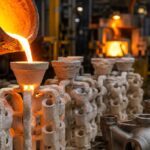
In this process, wax patterns are produced to match the required component geometry. These wax patterns are assembled, coated with ceramic material, and processed to create a strong ceramic shell. After the wax is removed, molten steel is poured into the shell cavity. Once the metal solidifies, the shell is removed and the casting is cleaned, finished, inspected, and prepared for further operations such as machining, heat treatment, surface treatment, or assembly.
The process is suitable for components that require:
- complex shapes
- near-net-shape geometry
- controlled wall thickness
- good surface finish
- repeatable production
- reduced fabrication or machining complexity
- integration of multiple features into one casting
- reliable material performance
Compared to some other manufacturing routes, investment casting allows engineers to produce complex steel parts with fewer joints, welds, or assembled sections.
This makes the process especially useful when component geometry and material performance must work together.
Why Steel Is Important in Investment Cast Components
Steel remains one of the most widely used engineering materials because it offers a strong combination of mechanical performance, design flexibility, and material variety.
Depending on the steel grade, investment cast components can be designed for:
- strength
- toughness
- wear resistance
- corrosion resistance
- heat resistance
- pressure handling
- machinability
- dimensional stability
- fatigue performance
- functional reliability
This makes steel investment casting suitable for both general industrial components and demanding engineering applications.
However, “steel” is not one material. It is a broad family of alloys. Carbon steel, low-alloy steel, stainless steel, martensitic stainless steel, duplex stainless steel, and heat-resistant steel can behave very differently during casting, heat treatment, machining, and service.
That is why steel grade selection must be connected to the application, operating environment, geometry, inspection requirement, and final supply condition.
Major Steel Families Used in Investment Casting
Different steel families are selected for different performance requirements. A well-planned steel investment casting program begins by identifying what the component must do in service.
Carbon Steel Investment Castings
Carbon steel investment castings are used where strength, toughness, and cost-effective performance are important.
They are commonly considered for industrial components, machinery parts, structural features, brackets, housings, general engineering parts, and certain pressure or flow-related components depending on the applicable specification and service condition.
Carbon steel grades may be selected when the component requires:
- good mechanical strength
- weldability in suitable grades
- machinability
- impact resistance
- general engineering performance
- economical material selection
The final properties of carbon steel castings depend on chemistry, heat treatment, section thickness, casting quality, and inspection requirements.
Low-Alloy Steel Investment Castings
Low-alloy steel castings are selected when standard carbon steel may not provide enough strength, hardness, toughness, wear resistance, or heat-treatment response.
These grades may contain alloying elements such as chromium, molybdenum, nickel, manganese, or vanadium, depending on the material specification.
Low-alloy steel investment castings may be suitable for:
- wear-prone components
- load-bearing parts
- machinery components
- impact-resistant parts
- components requiring improved hardenability
- parts exposed to more demanding mechanical conditions
These materials often require careful heat treatment planning to achieve the required mechanical properties.
Stainless Steel Investment Castings
Stainless steel investment castings are widely used where corrosion resistance, cleanliness, surface integrity, and long-term durability matter.
They are common in:
- valve components
- pump components
- flow-control parts
- food and processing equipment
- marine-related components
- chemical handling systems
- general corrosion-resistant industrial applications
Stainless steel castings are available in different families, including austenitic, martensitic, ferritic, precipitation-hardening, and duplex grades. Each family has different behavior in casting, heat treatment, machining, corrosion resistance, and service performance.
Austenitic stainless steels are often selected for corrosion resistance and general industrial use. Martensitic stainless steels may be selected where hardness, strength, and wear resistance are important. Duplex stainless steels may be considered where a combination of strength and corrosion resistance is needed.
Heat-Resistant Steel Castings
Heat-resistant steel castings are used where components must operate at elevated temperatures.
These grades may be suitable for:
- furnace-related components
- thermal process equipment
- heat-exposed industrial parts
- high-temperature machinery components
- applications requiring oxidation or scaling resistance
For heat-resistant castings, material selection must consider temperature range, thermal cycling, oxidation, creep behavior, and service environment.
Why Material Specification Matters
In global manufacturing programs, buyers often define materials through recognized standards rather than only common grade names.
A customer may refer to ASTM, ASME, SAE, AISI, UNS, DIN, EN, BS, JIS, ISO, IS, API, or other specification systems depending on their country, industry, or internal engineering standard.
This matters because material names alone can be misleading.
The same broad material description may not guarantee the same:
- chemical composition
- mechanical properties
- heat treatment condition
- testing requirement
- pressure rating suitability
- corrosion performance
- inspection requirement
- certification format
- acceptance criteria
For example, one customer may specify a casting based on ASTM requirements, while another may refer to DIN, EN, JIS, or IS specifications. In some cases, buyers may ask for equivalent grades across standards.
However, grade equivalence should never be assumed casually.
Cross-standard comparison must be verified through chemical composition, mechanical properties, heat treatment condition, product form, application requirement, and the latest applicable standard. Two grades may look similar but still differ in acceptance criteria, testing requirements, or intended use.
A responsible steel investment casting manufacturer should review the drawing, material specification, application requirement, and inspection criteria before confirming production feasibility.
Common Global Standards Buyers Refer To
International customers may use different material specification systems based on their region or industry.
Common references include:
- ASTM – widely used in the United States and global industrial procurement
- ASME – often used in pressure, piping, boiler, valve, and engineering applications
- SAE – commonly associated with automotive and engineering materials
- AISI – often used for steel and stainless steel grade identification
- UNS – unified numbering system for metals and alloys
- DIN – German standard references
- EN – European standards
- BS – British Standards
- JIS – Japanese Industrial Standards
- ISO – international standard references
- IS – Indian Standards
- API – commonly associated with oil, gas, valve, and pressure-related applications
For steel investment casting projects, these standards help define the material and quality expectation more clearly.
But the standard reference must be read carefully. A casting standard may include requirements for chemistry, mechanical testing, heat treatment, supplementary testing, repair conditions, pressure application, non-destructive testing, and documentation.
This is why standards awareness is important, especially for export-oriented steel investment casting programs.
Material Selection Should Start with the Application
The right steel grade should not be selected only because it is commonly available or familiar.
Material selection should begin with the component’s operating conditions.
Important questions include:
- Will the component carry load?
- Will it handle pressure or flow?
- Will it be exposed to corrosion?
- Will it operate at high temperature?
- Will it face wear or abrasion?
- Will it require machining after casting?
- Will it need welding or assembly?
- Will it require surface treatment or passivation?
- Will it need NDT or special inspection?
- Will the customer require specific certificates?
For example, a component used in a corrosive fluid-handling application may need stainless steel or duplex stainless steel. A machinery component requiring strength and toughness may need carbon steel or low-alloy steel. A heat-exposed part may require a heat-resistant grade. A component with critical sealing surfaces may require the selected material to support both casting quality and machining accuracy.
Material selection significantly impacts investment casting performance throughout manufacturing, machining, inspection, and final use. Therefore, material selection must be linked with design, manufacturing, inspection, and application.
Manufacturing Considerations in Steel Investment Casting
Steel investment casting requires strong process control because steel alloys can be sensitive to melting, pouring, solidification, heat treatment, and machining.
A good manufacturing plan must consider the complete route from material selection to final delivery.
1. Gating and Feeding
Steel castings require proper gating and feeding to control metal flow and solidification.
Poor gating or feeding can create defects such as shrinkage, porosity, misruns, cold shuts, or inclusions. These defects may affect internal soundness, machining quality, inspection results, and long-term performance.
For complex steel investment castings, gating and feeding must be planned based on geometry, section thickness, alloy behavior, and critical zones.
2. Shrinkage and Solidification Control
Steel shrinks during solidification. If shrinkage is not properly managed, cavities or internal discontinuities may form inside the casting.
This is especially important in components with thick sections, bosses, flanges, junctions, or heavy-to-thin transitions.
Directional solidification and proper feeding help guide shrinkage away from functional areas of the component.
3. Heat Treatment
Many steel castings require heat treatment to achieve the required mechanical properties, hardness, toughness, or corrosion performance.
Heat treatment may include annealing, normalizing, quenching, tempering, solution treatment, or other grade-specific processes.
The heat treatment route must be aligned with the material specification and customer requirement. Incorrect heat treatment can affect mechanical properties, dimensional stability, machinability, and service performance.
4. Machining Allowance
Many steel investment cast components require precision machining after casting.
Machining allowance must be planned early so the casting has enough stock on critical surfaces without creating unnecessary machining load.
Too little allowance can lead to cleanup issues. Too much allowance can increase cost, machining time, tool wear, and distortion risk.
The best results come when casting design and machining strategy are reviewed together before tooling and production.
5. Inspection and Testing
For critical steel investment casting components, inspection and quality assurance must be planned according to the material, application, and customer specification.
Inspection may include:
- visual inspection
- dimensional inspection
- chemical analysis
- mechanical testing
- hardness testing
- dye penetrant testing
- magnetic particle testing
- radiography
- ultrasonic testing
- leak testing
- documentation review
The inspection plan must be based on the component’s function, material grade, customer specification, and risk level.
6. Surface Treatment and Finishing
Steel investment castings may also require surface treatments and finishes based on corrosion, appearance, cleanliness, or functional requirements.
This may include shot blasting, pickling, passivation, polishing, coating, painting, or other customer-specific finishing requirements.
For stainless steel castings, surface condition can influence corrosion performance. For machined steel components, finishing may affect appearance, cleanliness, sealing, handling, or assembly.
Steel Investment Casting and Precision Machining
Steel investment casting often reduces machining compared to manufacturing a component fully from bar stock, forging, or fabrication. However, many functional surfaces still need CNC machining.
Machining may be required for:
- sealing faces
- bores
- threads
- mounting surfaces
- datum faces
- bearing locations
- critical holes
- flatness requirements
- assembly interfaces
- tolerance-critical features
This is where integrated casting and machining capability becomes important.
If the casting supplier and machining team work separately, problems may appear later. The casting may not have proper machining allowance. Datum locations may be unclear. Fixture planning may become difficult. Heat treatment may create distortion. Critical surfaces may not clean up consistently.
When investment casting and precision machining are planned together, the component can be designed for a smoother manufacturing route.
This improves accuracy, reduces rework, and supports final component readiness.
Steel Investment Casting for Ready-to-Use Components
Many customers no longer want only raw castings.
They need components that are closer to final use. This may include machining, finishing, inspection, sourced hardware, assembly, packaging, documentation, and scheduled dispatch.
Steel investment cast components may need to be supplied as:
- raw castings
- machined castings
- heat-treated castings
- surface-finished components
- inspected components
- sub-assembled parts
- ready-to-use components
- packed and dispatch-ready components
This changes the role of the casting manufacturer.
The supplier must not only produce the casting. The supplier must understand how the casting moves into machining, inspection, assembly, and final delivery.
For global buyers, this reduces coordination effort. Instead of managing multiple vendors for casting, machining, finishing, inspection, and assembly, they can work with a manufacturing partner that manages the full component journey.
Why India Is a Strong Sourcing Destination for Steel Investment Casting
India has a strong manufacturing ecosystem for castings, machining, engineering components, and export-oriented industrial supply.
For global buyers, steel investment casting manufacturers in India can offer several advantages:
- established casting and foundry ecosystem
- engineering and manufacturing talent
- cost-effective production capability
- export experience
- ability to support small, medium, and recurring production programs
- machining and finishing support
- familiarity with global specifications
- flexible manufacturing and sourcing support
However, buyers should evaluate more than price.
The right steel investment casting company in India should be assessed on:
- material capability
- investment casting experience
- process control
- machining capability
- inspection infrastructure
- documentation discipline
- communication quality
- delivery reliability
- ability to support global specifications
- readiness to handle complete component programs
For critical steel components, manufacturing maturity matters as much as capacity.
Choosing the Right Steel Investment Casting Manufacturer
When selecting a steel investment casting partner, customers should look at the complete manufacturing system.
Important evaluation areas include:
Material Understanding
The supplier should understand steel grade requirements, global standards, heat treatment needs, and testing expectations.
Engineering Review
The supplier should review drawings for castability, machining allowance, datum planning, tolerance requirements, wall thickness, and critical surfaces.
Process Control
A controlled process should cover wax pattern production, shell building, melting, pouring, heat treatment, finishing, inspection, and documentation.
Machining Capability
For components that require finished tolerances, precision machining capability is essential.
Inspection Discipline
The supplier should be able to support dimensional inspection, material verification, NDT coordination, documentation, and customer-specific quality requirements.
Assembly and Ready-to-Use Supply
If the customer needs a finished component or assembly, the supplier should be able to manage machining, sourced parts, assembly, cleaning, packing, and dispatch readiness.
Export and Documentation Support
Global customers often need proper certificates, inspection reports, packing documents, and shipment coordination. Documentation quality is part of supply quality.
Shilpan Steelcast’s Approach to Steel Investment Casting
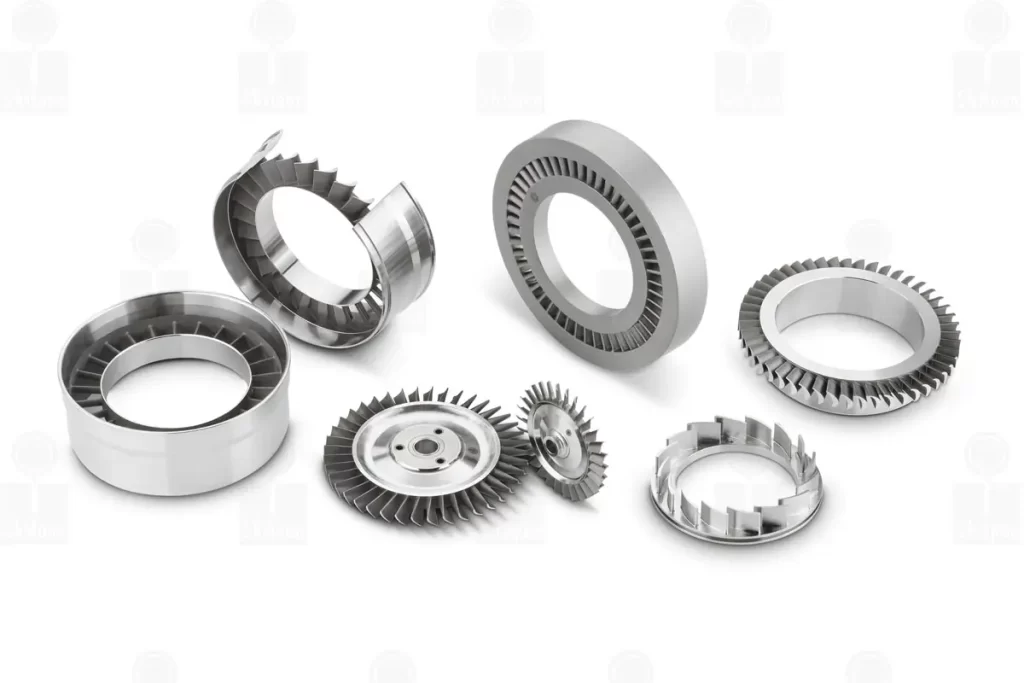
Shilpan Steelcast supports customers with investment casting, precision machining, assembly, strategic sourcing, inspection, and supply chain management under one coordinated manufacturing framework.
As one of India’s largest investment casting manufacturers based in Rajkot, Gujarat, Shilpan Steelcast works with customers who require more than castings. Many programs involve material specification review, casting development, machining, inspection, finishing, assembly support, documentation, and ready-to-use component supply.
For steel investment cast components, this integrated approach is important.
Material selection must align with the application. Casting design must support process control. Machining allowance must be planned early. Inspection must verify quality. Assembly and dispatch requirements must be considered before final delivery.
By managing these stages together, Shilpan Steelcast helps customers reduce supplier coordination and improve control over complex metal component programs.
Conclusion
Steel investment casting is an important manufacturing route for components that require strength, complex geometry, corrosion resistance, heat resistance, machining readiness, and reliable repeat production.
But successful steel casting programs depend on more than choosing a steel grade.
Material specifications, global standards, casting design, gating and feeding, heat treatment, machining allowance, inspection, documentation, and final delivery requirements must all be aligned. This is especially important for customers sourcing steel investment cast components from India for global applications.
A capable steel investment casting manufacturer should understand both the foundry process and the final component requirement.
For buyers, the right partner is not only the one who can pour steel. It is the one who can convert a material specification and component drawing into a reliable, inspected, machined, and ready-to-use supply program.
Discuss Your Steel Investment Casting Requirements
Need steel investment cast components built to your material, machining, inspection, and delivery requirements?
Contact Shilpan Steelcast to discuss your component drawings, steel grade specifications, global material standards, and ready-to-use supply expectations.
Latest Post
-
 September 29, 2026 Dispatch-Ready Components: Why Cleaning, Packing, and Final Preparation Matter
 -
August 29, 2026 Non-Destructive Testing for Investment Cast Components: A Practical Guide
-
August 28, 2026 Gating and Feeding in Investment Casting: Why Metal Flow Determines Casting Quality