


December 30, 2025
From Supplier to Program Partner: How OEMs Are Rethinking Manufacturing Relationships

For decades, OEMs built their supply chains around specialization. One supplier for investment castings. Another for machining. A third for assembly. Each played a defined role, governed by drawings, timelines, and purchase orders. On paper, the model looked efficient.
In reality, it often created complexity, fragmented responsibility, blurred accountability, and delays that surfaced only when programs were already under pressure.
Today, that model is being quietly but decisively challenged.
Across automotive, industrial equipment, energy, and fluid control sectors, OEMs are rethinking what they truly need from manufacturing partners. The conversation is no longer about who can make a part. It’s about who can own a program.
The Shift OEMs Are Making—From Parts to Outcomes
Modern OEM programs are more demanding than ever. Product variants multiply. Volumes fluctuate. Regulatory expectations tighten. Launch windows shrink. Under these conditions, managing a chain of disconnected suppliers becomes a risk in itself.
OEMs are responding by consolidating responsibility. Instead of coordinating precision casting, CNC machining, finishing, logistics, and assembly across multiple vendors, they are increasingly seeking partners who can manage these interfaces internally. The goal is not convenience, it is control. When fewer handoffs exist, fewer things fall through the cracks.
This shift marks the emergence of a new expectation: the manufacturing partner as a program stakeholder, not just a component supplier.
Why Traditional Supplier Models Are Reaching Their Limits
Vendor fragmentation introduces hidden costs that are rarely visible during sourcing but become painfully obvious during execution.
Tolerance stack-ups between metal-casting and machining stages result in rework. Engineering changes ripple slowly across suppliers. Delivery schedules slip while responsibility is debated. When issues arise, no single party owns the outcome; each owns only their scope.
OEMs are recognizing that these inefficiencies are not operational accidents. They are structural.
A program-partner model addresses this by aligning engineering intent, manufacturing execution, and delivery accountability under one umbrella. It replaces coordination with integration and finger-pointing with ownership.
What Defines a True Program Partner?
Being labeled a “single-source supplier” is easy. Operating as a program partner is not. OEMs increasingly look for partners who demonstrate three core capabilities:
1. Integrated execution across processes
Investment casting, machining, assembly, and finishing must operate as connected stages, not independent departments. Decisions made upstream should anticipate downstream impact, whether that involves machining allowances, assembly fitment, or inspection strategy.
2. Engineering participation, not just compliance
Program partners don’t wait for perfect drawings. They engage early, asking how a part will function, assemble, and perform over time. Design-for-manufacturability inputs, tolerance optimization, and process planning become part of collaboration, not change requests.
3. Single-point accountability
When a program slips, someone must own the recovery. OEMs value partners who take responsibility for outcomes, not just deliverables, and who manage risk proactively rather than escalate issues reactively.
Why This Matters More Than Ever
Global OEM programs are increasingly distributed. Design teams may sit in Europe, sourcing in North America, manufacturing in India, and assembly near end markets. In this environment, coordination overhead becomes a silent cost driver.
A program partner simplifies this complexity. Fewer interfaces. Clear ownership. Predictable execution.
This model also supports scalability. As programs grow, shift volumes, or introduce variants, integrated partners adapt internally without forcing OEMs to re-engineer their supply chains midstream.
From Manufacturing Capability to Execution Discipline
The most telling change in OEM sourcing behavior is subtle but significant: capability alone is no longer enough.
Many suppliers can cast complex geometries or machine tight tolerances. Far fewer can do so consistently, across volumes, while aligning engineering intent, quality systems, and delivery schedules.
OEMs are gravitating toward partners who demonstrate execution discipline and understand that manufacturing is not just about making parts, but about delivering confidence.
The Road Ahead
The supplier-to-partner transition is not a trend. It is a structural shift driven by program complexity, cost pressure, and the need for predictability in an increasingly volatile manufacturing landscape.
OEMs that embrace this model gain more than operational efficiency. They gain clarity, clear ownership, more transparent communication, and clearer outcomes.
And manufacturers who evolve into program partners don’t just win contracts. They become embedded in the success of the programs they support.
How Shilpan Steelcast Operates as a Program Partner for Global OEMs

This shift from supplier to program partner is not theoretical. It reflects how manufacturing leaders like Shilpan Steelcast structure and execute OEM programs today.
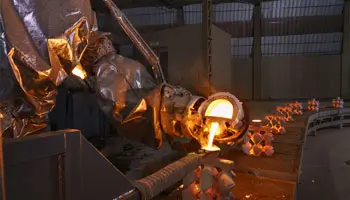
As one of the largest investment casting manufacturers in India, Shilpan Steelcast has evolved its operations to support OEMs looking for single-point accountability across casting, precision machining, and assembly. Rather than operating these capabilities in silos, Shilpan aligns them under a unified engineering, quality, and execution framework.
What this means in practice is straightforward:
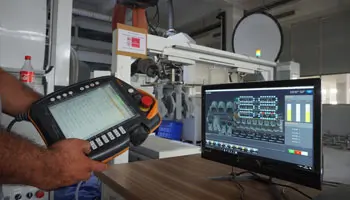
Investment casting, CNC machining, and assembly are planned together, not sequentially, so that design intent, tolerances, and functional requirements are preserved from raw casting through final assembly. Engineering teams engage early to support manufacturability, process planning, and risk reduction before production ramps up. Quality controls are embedded across stages, ensuring consistency as programs scale.
For global OEMs, this integrated approach reduces coordination overhead, shortens response times, and minimizes execution risk, particularly in programs involving multiple part variants, tight launch schedules, or downstream assembly requirements.
With manufacturing rooted in India and strategic supply chain support for international customers, Shilpan Steelcast enables OEMs to shift from managing suppliers to working with a program owner accountable not just for parts but for outcomes.
Conclusion
If your next program demands tighter coordination, more transparent accountability, and predictable execution from casting to assembly, working with a program-oriented manufacturing partner can make the difference.
Contact us and learn how Shilpan Steelcast supports integrated OEM programs from investment casting and precision machining to final assembly under one accountable manufacturing ecosystem.